Servo drive technology for everyday use
From hydraulic drives to servo drives: STOBER increases precision and energy efficiency in ID card production
Tiepner, a manufacturer of fixtures and special machines, develops and designs systems to produce and individually design ID cards, among other applications. Previously, the punching process was carried out using hydraulic drives. Although these were reliable and robust, they did not meet the required accuracy and had high energy requirements, resulting in high operating costs. This is why this mechanical engineering company now relies on STOBER drive technology. In addition to drive controllers and servo motors, different gearboxes are used, ranging from powerful designs for demanding tasks to cost-effective economy variants.
Pforzheim, 2026-09-17 – ID cards, driver’s licenses and gym membership cards – without these small plastic cards in our wallets, our everyday lives would be almost impossible to manage. But have you ever wondered how they are made and how complex the technology behind them is? Christian Höltge knows the answers. He is the CEO of the special machine manufacturing company Tiepner, headquartered in Töging, which develops and designs systems used by companies such as Germany’s federal printing company, the Bundesdruckerei, to produce and customize credit cards and ID cards in ID-1 format. “They consist of multiple layers of films that can contain embossing, chips, magnetic stripes, security features such as holograms or RFID and memory modules,” he explains. The portfolio of this family business also includes tool and fixture manufacturing for welding plastics. In addition to the Bundesdruckerei, its customers also include companies from the medical technology and automotive industries. “Our automotive business is in sharp decline,” says Höltge. “We therefore need to restructure and adapt our products in order to tap into new markets and applications.” The competitive situation is challenging. Flexibility, quality and reliability are becoming increasingly important. The company, with its 13 employees, is active worldwide and would like to grow further. Tiepner is taking proactive steps in that direction, such as entering into cooperation agreements with partner companies and consistently expanding sales and marketing.
A clear focus on precision
For the production of ID cards, passports and other important documents, various films are taken from sheets or rolls and combined. The system aligns the films, checks the material thickness and stacks them in the correct position. The laminated packet is then fed to the punching machine. After the punching process, the cards are checked for dimensional accuracy, surface quality, RFID function and other possible features before they are stacked in a magazine. Hydraulic drives were previously used for triple punching. These are characterized by a high power density, continuous adjustability and a robust design. In practice, however, there were limits to the adjustment accuracy and the reproducibility of the results, along with higher maintenance costs and susceptibility to leaks.
Tiepner wanted to optimize the design of the axes, make the unit more compact, increase energy efficiency and ensure simple commissioning. For this purpose, the decision was made to convert the punching unit from a hydraulic to a servo drive. During operation, electric drives are often more economical in terms of energy consumption, while hydraulic systems can quickly become cost-intensive. Electric drives are also easier to maintain. Oil leaks are not even an issue. Temperature fluctuations also have little effect on the performance of electric drives. In hydraulic systems, in contrast, performance can depend heavily on how hot or cold the oil is.
Tiepner and STOBER, headquartered in Pforzheim, have been in contact since 2020. “Back then, we supplied a drive solution, and our customer is still very satisfied with it today,” reports Julian Wende, Area Sales Manager at STOBER. During the first on-site meeting about the new project, the sales engineer gained a comprehensive impression of the systems, their functions and their wide range of applications. He was suitably impressed.
Optimally coordinated drive technology
“We supplied our SI6 series drive controllers as a multi-axis drive system,” reports Wende. Thanks to their compact design with a width of 45 millimeters, they require little space in the control cabinet. At the same time, they offer a range of useful functions. “But more important than the compactness of the SI6 is the fact that it eliminates the need for redundant supply modules,” explains Höltge: “A whole series of drive controllers can be connected to the central PS6 supply module. This eliminates the need for additional fuses and cabling for each individual axis.”
The installed components include compact EZ synchronous servo motors. This series offers maximum torque, high dynamics and low torque ripple.
Depending on the requirements for torque, speed, smooth operation, efficiency and size, different gearboxes are installed in the systems. These include the P series planetary gearboxes with extremely high efficiency and the helical gearing typical of STOBER, which ensures smooth and quiet operation.
“In addition to drives for demanding positioning tasks with high dynamics, we also need drives for lifting and conveying,” explains Wende. These drives have to meet all of the high quality standards of the machines with regard to smooth operation, backlash stability and service life. The KLM geared motor – a combination of a helical bevel gearbox and Lean motor in a direct attachment configuration – provides the user with an extremely energy-efficient drive that is particularly suitable for automation applications – for example, as a lifting unit for non-punched card sheets.
The KLM is extremely compact, has a robust housing geometry for an extremely long service life, is lightweight and operates particularly efficiently thanks to the IE5 classification of the motor. In addition, users benefit from low installation costs. Since there is no encoder, the drive can be continuously controlled with just one standard power cable. This reduces cabling work, simplifies commissioning and lowers costs.
The position and speed are determined in combination with the SI6 drive controller. Communication takes place via PROFINET. The certified communication interface allows the user to easily integrate it into the higher-level control system.
Precise and flexible
STOBER supplied a high-performance system with coordinated components. Design engineers get everything from a single source and benefit from an experienced contact partner who provides support in the implementation of all drive tasks. “We were very satisfied with the advice, design, delivery and on-site commissioning,” says Höltge in summary. “It’s the whole package. Even as a small company, we received good support.”
With the new drive technology from STOBER, sheets in the 3×6 to 3×10 millimeter format can be processed more precisely and efficiently. Users benefit from shorter set-up times, intuitive operation and a flexible structure. At maximum output, the system produces around 12,000 cards per hour. “This makes us particularly competitive,” reports Höltge with satisfaction. In addition to the high throughput, the system also boasts low maintenance requirements.
Captions:
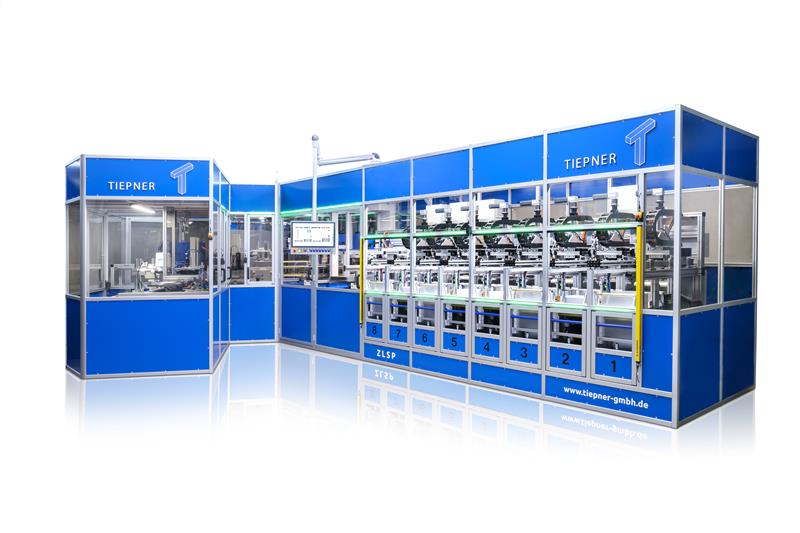
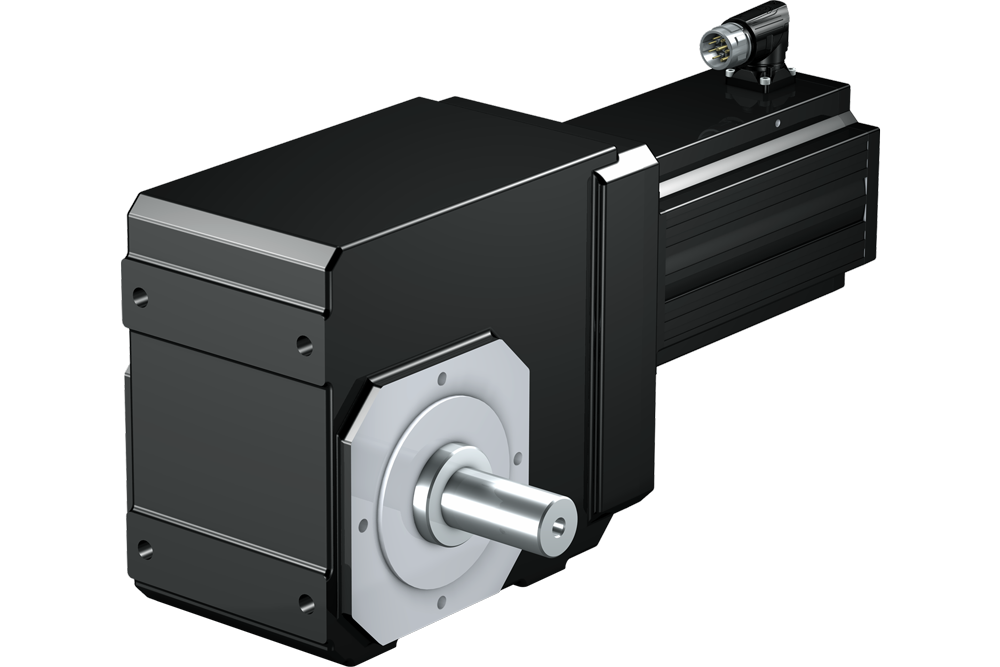
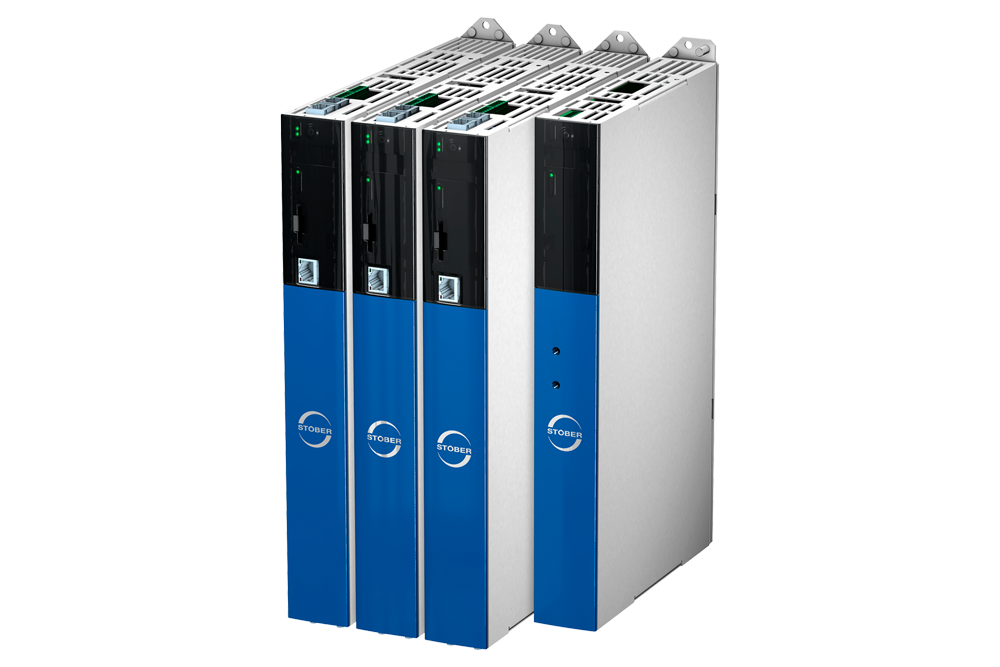
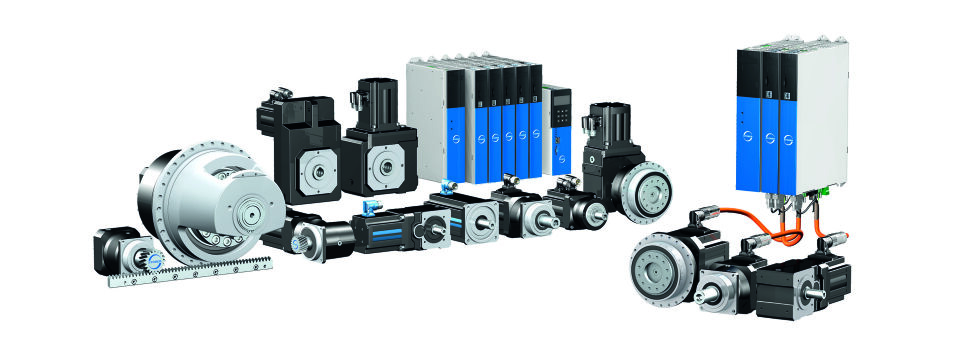
Photo credits: STÖBER Antriebstechnik GmbH + Co. KG
You can find high-resolution image material for downloading here.
STOBER develops and produces precise, highly efficient drive components and systems, including gearboxes, motors, gear racks and drive controllers for custom solutions. They are used in various industries, including automation and robotics, as well as the plastics, packaging and machine tool industries. STOBER has 14 locations and 80 service partners in over 40 countries. In addition to its headquarters in Pforzheim, Germany, there are also production facilities in Hungary and the US. The family-owned company currently employs around 1,000 people worldwide.
| Germany: | Austria: |
| STÖBER Antriebstechnik GmbH + Co. KG Kieselbronner Str. 12 75177 Pforzheim Phone: +49 7231 582-0 sales@stoeber.de www.stober.com | STÖBER Antriebstechnik GmbH Hauptstraße 41a 4663 Laakirchen Phone: +43 7613 7600-0 sales@stoeber.at www.stoeber.at |
| Switzerland: | |
| STÖBER Schweiz AG Rugghölzli 2 5453 Remetschwil Phone: +41 56 496 9650 sales@stoeber.ch www.stober.ch |
Contact data for country-specific publication:
Press information officer:
STÖBER Antriebstechnik GmbH + Co. KG
Silvia Feder / Head of Marketing
Phone: +49 7231 582-0
silvia.feder@stoeber.de
www.stoeber.de
Media:
STÖBER Antriebstechnik GmbH + Co. KG
Solveig Moll
Phone: +49 172 7204013
solveig.moll@stoeber.de
www.stoeber.de
Please send a specimen copy to our agency:
a1kommunikation Schweizer GmbH
Sarah Grujin
Beratung PR & Werbung
Oberdorfstr. 31/1
70794 Filderstadt│Deutschland
Phone: +49 711 945 416-27
sarah.grujin@a1kommunikation.de
www.a1kommunikation.de